Why Minecraft Might Be the Best Educational Tool You’re Not Using (Yet)
--
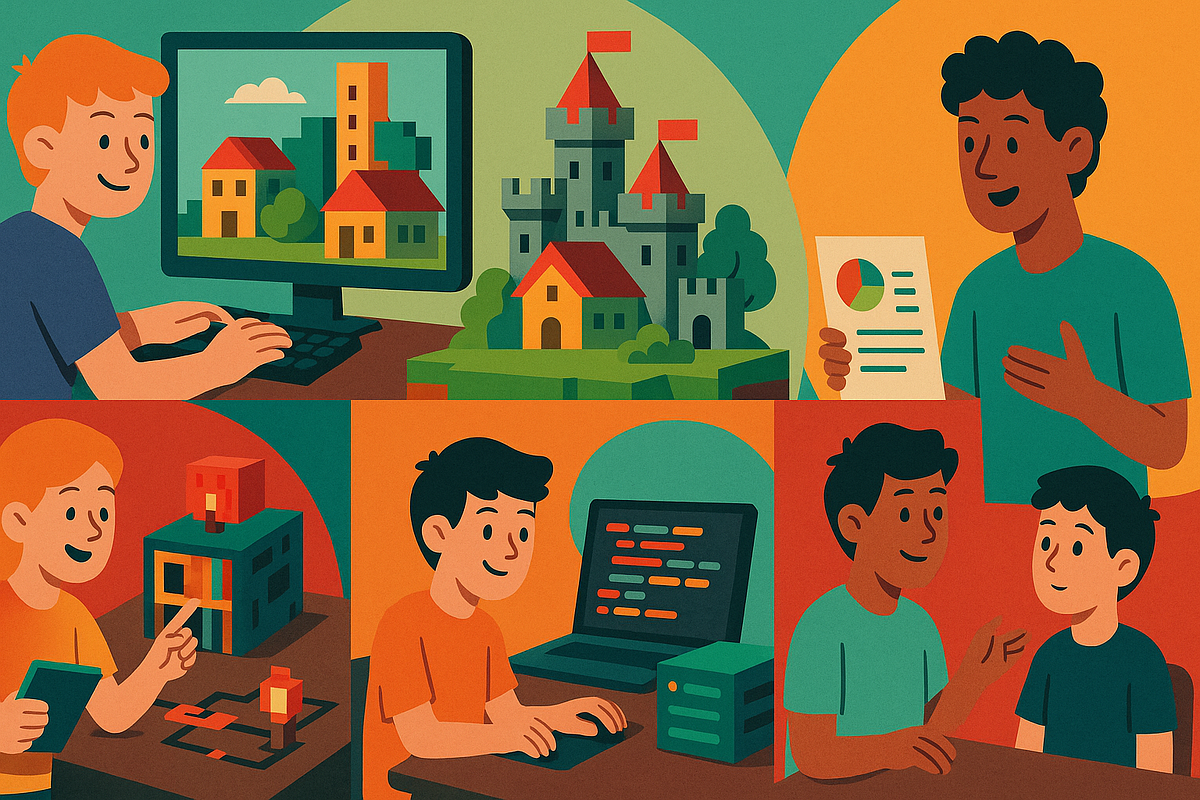
And 3 Parent-Led Summer Projects to Turn Screen Time into Skill Time “I thought he was just building castles. Turns out, he was designing a city with zoning rules, an economic system, and a diplomatic backstory. In Minecraft.” If you’re like most parents, you’ve probably wished your kid would spend less time on Minecraft and more time “doing something productive.” But what if Minecraft is productive — if you know how to steer it? At IterLight, we’ve seen firsthand how Minecraft can become a gateway to real learning — writing, coding, logic, storytelling, even soft skills like collaboration and project planning.
Why Minecraft Has Hidden Educational Power:
✅ **Redstone = Engineering & Logic ** Building Redstone machines in Minecraft teaches the same logical structures as computer science: if/then, loops, inputs/outputs. Kids troubleshoot, test, and iterate — exactly what we want in future problem-solvers. ✅ **Worldbuilding = Narrative Writing + Research ** Creating cities and fantasy worlds means inventing stories. Players plan economies, histories, transportation systems — and often mirror what they’ve seen in real life. That’s urban studies, history, and writing, disguised as play. ✅ **Mods & Multiplayer = Coding + Digital Citizenship ** Kids who dive into Minecraft mods or host multiplayer servers learn to install code, configure systems, and set community rules. This builds technical confidence and responsibility.
So What Can You Do This Summer?
Here are 3 parent-powered project ideas to turn Minecraft from a game into a learning lab:
1. Build a Fantasy City — Then Write the Travel Guide
Best for: Creative storytellers, kids 8–14 Your Role: Help structure the writing into fun weekly goals. Step-by-step:
- Ask your child to design a city or fantasy land (encourage themes: underwater world, sky islands, jungle fortress).
- Break it into 5–6 districts: residential, market, academy, castle, secret lair, etc.
- Each week, prompt them to write about one area. Ideas:
- “What’s the main attraction here?”
- “Who lives there?”
- “What’s a local festival like?” 📘 Bonus: Print and bind the final project as “The Official Guide to [Their World Name].”
2. Invent a Redstone Machine — Then Explain How It Works
Best for: Tinkerers, STEM-curious kids Your Role: Encourage documentation like a real engineer. Step-by-step:
- Set a challenge: “Can you build an automatic animal feeder?” or “Create a security trap that only you can open.”
- Ask your child to document:
- The goal of the machine
- Materials used
- Each step of the build (include photos or screen recordings)
- What didn’t work — and how they fixed it 🧠 Bonus: Introduce real-world logic gates (AND, OR, NOT) to connect Minecraft to basic computer science.
3. Run a Server or Mod — Like a Digital Startup
Best for: Older kids (12+), tech-savvy or collaborative types Your Role: Frame this as a leadership opportunity. Step-by-step:
- Help your child set up a private server (you can use services like Akliz or Apex Hosting with moderation tools).
- Guide them in defining “server rules,” choosing mods, and inviting friends. Encourage them to:
- Write server guidelines (communication, conduct, etc.)
- Assign roles (builders, moderators, explorers)
- Reflect weekly on what’s working in their community 🌐 Bonus: Treat this like a mini startup — ask them to pitch their server to you in 2 minutes. It builds confidence and presentation skills.
Final Thought:
Minecraft isn’t just a game — it’s a sandbox for creativity, systems thinking, and storytelling. As a parent, you don’t have to be the expert. You just have to help frame the experience. And if you want more personalized guidance? That’s what we’re here for at IterLight. We help families turn interests into learning journeys — with structure, strategy, and a whole lot of fun.